

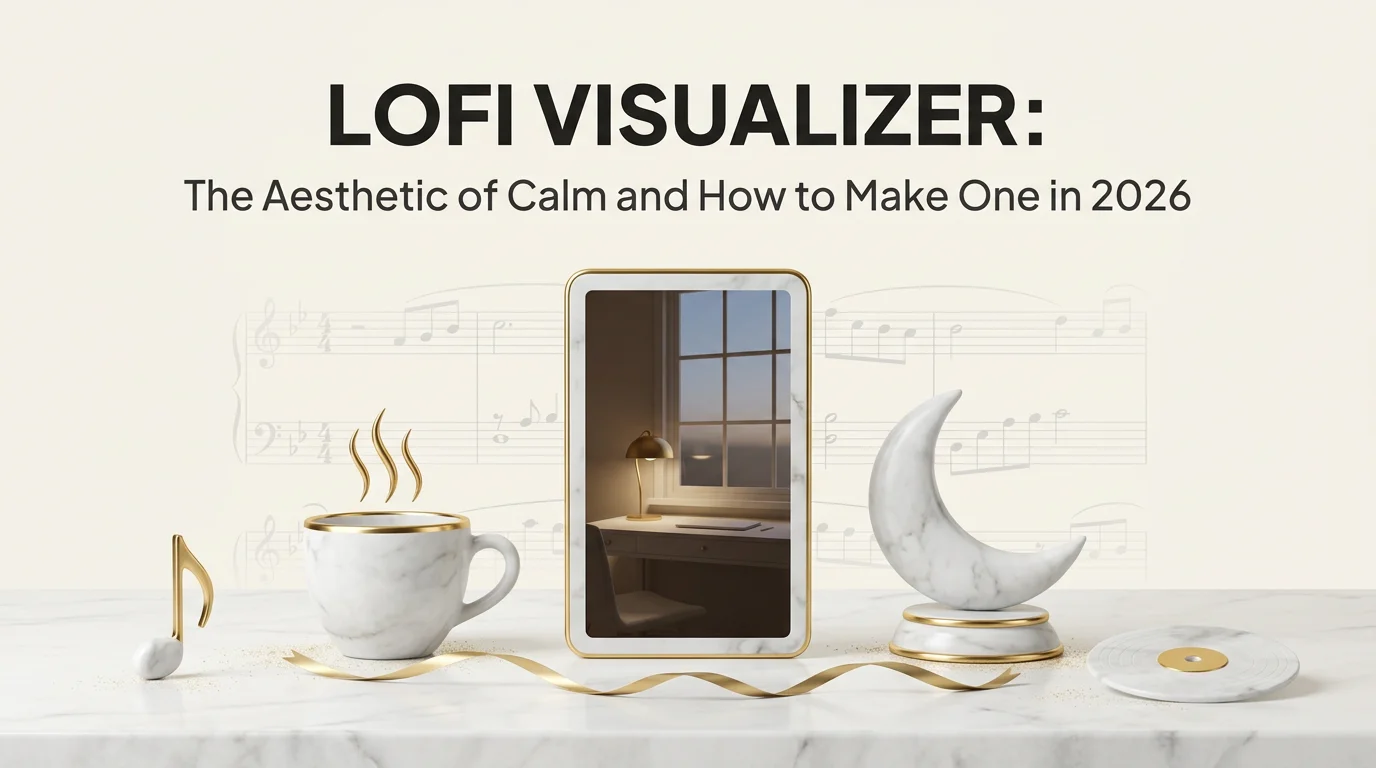
A lo-fi visualizer is the looping animated visual that pairs with lo-fi hip hop tracks, lo-fi chill releases, and the long-form streams that defined the genre's visual identity. The original lo-fi visualizer aesthetic was set by the ChilledCow stream (later Lofi Girl) starting in 2017: a single anime character at a desk, slowly looping animation, warm desk lamp light, rain on a window. That single visual essentially defined what lo-fi looks like for an entire generation of listeners.
A lo-fi visualizer in 2026 is a 5 to 15 second looping animation, anime or anime-adjacent in style, featuring a single character or environment with minimal motion. Color palette warm (sepia, soft pinks, muted golds) or cool (dusty blues, lavender). The visual stays simple because the music is meant to be background; visual complexity competes with the genre's calming intent. The rest of this guide covers the visual codes, the production paths, and how AI generation produces lo-fi visualizers without filming or hiring an animator.
Key Takeaways
- Lo-fi visualizer aesthetic was defined by Lofi Girl and has remained remarkably consistent since 2017.
- The visual stays simple deliberately. Lo-fi music is background music; complex visuals undermine the genre's calming purpose.
- 5 to 15 second loops are the standard format. Long streams stitch together these loops or use a single longer loop that runs continuously.
- Warm or cool palettes both work. Sepia, soft pinks, muted gold for warmth; dusty blue, lavender, soft grey for coolness.
- AI generation suits lo-fi well because the aesthetic is stylized (anime-influenced) and the motion requirements are minimal.
The Lo-Fi Visualizer Visual Codes
Five elements appear consistently across the lo-fi visualizer aesthetic.
Anime or anime-adjacent style. The genre's visual identity was set by anime references and has remained there. Other illustration styles (3D, photorealistic, vector) appear occasionally but anime is the default.
A single character or static scene with minimal motion. The classic Lofi Girl visual loops her writing at a desk; many derivatives keep a single character with similar minimal animation. The motion is enough to read as alive, not enough to demand attention.
Warm desk-lamp or window-light lighting. Late afternoon or evening light is the dominant time-of-day for lo-fi visuals. Direct overhead daylight feels wrong for the genre.
Cozy interiors or atmospheric outdoor scenes. Bedrooms, study rooms, cafes, train cars, balconies overlooking cities at night, rooftops in rain.
Rain, snow, or other gentle ambient weather. Optional but extremely common. The weather adds motion without adding energy.
The Lo-Fi Sub-Aesthetics
The umbrella covers a few sub-looks.
Classic lofi hip hop aesthetic (Lofi Girl tradition). Single anime character, study or work setting, warm lamp lighting, rain on windows.
Lo-fi chill / outdoor aesthetic. Wider environments, urban night scenes, rooftops, parks. Less character-focused, more atmospheric.
Lo-fi cassette / retro aesthetic. Older 90s vibe, visible cassette tapes or 90s technology, slight film grain, more saturated colors.
Vaporwave-influenced lo-fi. Pink and teal palette, retro Japanese signage, abstract gradients, somewhat between lo-fi and synthwave aesthetically.
Picking one tightens the visual direction. Most lo-fi releases default to the classic lo-fi hip hop aesthetic because the genre association is strongest.
Producing a Lo-Fi Visualizer
For a 5 to 15 second loop:
- Pick the sub-aesthetic and the specific scene (character at desk, character on train, character on balcony, etc.).
- Write a creative direction with anime style, lo-fi setting, warm lamp light, gentle motion, and the genre-typical environmental details.
- Generate the scene. Echonos Engine produces this kind of stylized content well because the requirements (anime style, minimal motion, atmospheric) play to AI strengths.
- Extract a loop-able segment. The 5 to 15 second range works for visualizer loops; pick a segment that loops cleanly without an obvious cut.
For long-form streams (the 24/7 lo-fi streams that built the genre's audience), the same loop can run continuously, or multiple loops can be cycled through a streaming software like OBS.
The music visualizer complete guide covers the broader visualizer category; the AI music visualizer guide covers the AI generation specifics.
Common Lo-Fi Visualizer Mistakes
Too much motion. Lo-fi visualizers are calming; jumpy or busy animation breaks the genre.
Wrong character style. Photorealistic humans look out of genre. Stick to anime or stylized illustration.
Bright daytime lighting. Late afternoon to evening is the genre default. Mid-day sun feels wrong.
Complex narrative scenes. Lo-fi visualizers do not tell a story. Single moment, looped, calming.
Forgetting weather. Rain or snow at the window is so common in lo-fi that its absence reads as missing. Not mandatory but expected.
More visualizer guides from Echonos:
- the complete music visualizer guide (3 types and how to pick)
- best music visualizer software, 8 tools ranked
- AI music visualizers compared
- how audio reactive visualizers work
- audio visualizer for YouTube uploads
- instrumental music video and visualizer options for producers
- NeuralFrames alternatives for audio reactive work
FAQ
Frequently Asked Questions
5 questions answered. Tap to expand.
How long should a lo-fi visualizer be?
How long should a lo-fi visualizer be?
Standard lo-fi visualizer loops run 5 to 15 seconds for single song uses. For long-form lo-fi streams the loop can be 30 to 90 seconds and run continuously for hours. The loop must connect end-to-beginning seamlessly to avoid an obvious restart.
Can I make a lo-fi visualizer with AI?
Can I make a lo-fi visualizer with AI?
Yes. The aesthetic (stylized anime, minimal motion, atmospheric lighting) suits AI generation well. Tools that produce anime-style image generation and looping animation produce lo-fi visualizers that match the genre standard.
What style fits lo-fi hip hop visualizers?
What style fits lo-fi hip hop visualizers?
Anime or anime-adjacent illustration, single character in a cozy interior, warm desk-lamp lighting, gentle motion, optional rain on a window. The Lofi Girl tradition set the standard and remains the most common single template.
Do I need a different visualizer for every lo-fi track I release?
Do I need a different visualizer for every lo-fi track I release?
Not necessarily. Many lo-fi artists use a recurring visualizer or a small library of visualizers across multiple releases. Audience expectations in lo-fi favor consistency over variety; a recognizable visualizer for your project can become part of your brand.
What is the difference between a lo-fi visualizer and a regular music visualizer?
What is the difference between a lo-fi visualizer and a regular music visualizer?
A regular music visualizer is usually audio-reactive (motion responds to the audio). A lo-fi visualizer is usually a static or near-static animated loop that does not respond to audio. The genre's calming intent favors the second pattern; audio-reactive motion fights the relaxation purpose.
The Read on Lo-Fi Visualizers
Lo-fi visualizers have a remarkably stable aesthetic dating back to the Lofi Girl stream in 2017: anime character, warm lighting, cozy interior, gentle motion, rain at the window. The constraints (stay simple, stay calming, do not compete with the music) are unusual among music video formats because most other genres reward motion and complexity. Lo-fi rewards restraint.
If you have a lo-fi release and want a visualizer that fits the genre standard, Echonos Engine accepts the anime-style creative direction and produces visualizer-friendly looping content in the aesthetic the lo-fi audience expects.
Keep reading
Related Articles
Music Visualizer: The Complete Guide to Audio-Reactive Visuals
A music visualizer turns audio into synced visual motion. The 3 types (real time, rendered, AI scene based), where each is used, and how to pick one.

Instrumental Music Video: How Producers Can Visualize Tracks Without Vocals in 2026
How producers can make an instrumental music video in 2026, with beat synced visuals, type beat ready cuts, and the Echonos style presets that read as producer.
AI Music Visualizer: Why the New Tools Replaced Old WMP-Style Visualizers
An AI music visualizer reacts to what is in the track, not just volume. The tools available now, what they do that old visualizers cannot, and how to pick.

Written by
Echonos Team
We build Echonos — an AI music video pipeline for indie artists, managers, and small labels. We write here about how we think about audio, visuals, and release workflow.